
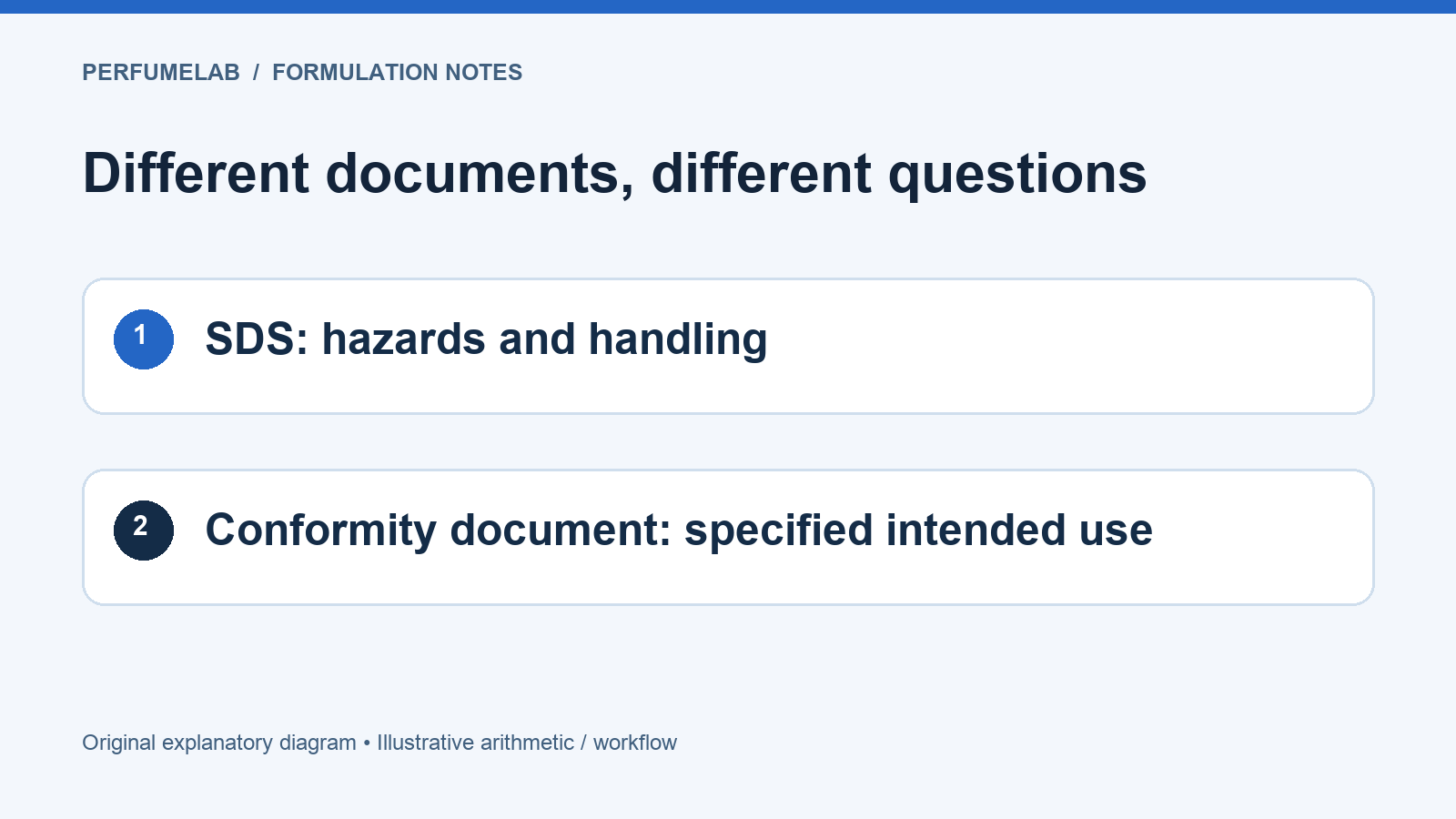

An SDS and an IFRA Certificate of Conformity serve different purposes. If you are deciding how to handle a material at the bench, start with its safety information. If you are assessing a fragrance mixture for a specified use, you need the relevant conformity information as well.
What an SDS helps you do
The UK Health and Safety Executive explains that safety data sheets describe hazards and provide handling, storage and emergency information. The SDS supports a risk assessment; it is not itself that assessment.
Keep the sheet for the exact supplied product and check its revision date. A diluted stock may have a different document from a neat material. If you cannot reconcile the product identity on the sheet with the bottle, ask the supplier.
What a conformity declaration addresses
An IFRA Certificate of Conformity concerns a fragrance mixture and its specified intended use. It does not turn a hazard document into a recipe, and it does not replace a finished-product safety assessment. IFRA does not issue these certificates.
For a practical filing exercise, imagine two questions about the same purchased fragrance: “What precautions are needed if this spills?” and “What use level is declared for my intended product?” Do not expect one number or document to answer both.
Keep the other evidence alongside them
A technical specification, batch information and relevant composition or allergen information may answer further questions. Do not reconstruct an undisclosed complete formula from the ingredient ranges in an SDS. Those ranges serve hazard communication and may not provide the composition detail needed for your calculation.
Use a document register with product identifier, supplier, document type, revision date, file location and the question it supports. Mark unanswered questions explicitly. A folder full of PDFs can look reassuring while still missing the one item that matters for a decision.
Before finalising a product, resolve those gaps through the supplier and appropriate review. Keeping the purposes separate makes the work clearer: handling evidence, formulation evidence and product assessment should connect, but none should be mistaken for all three.
[…] the paperwork is confusing, start with the guide to SDS documents and IFRA certificates. When a diluted stock is involved, keep its mass separate from the amount of active material it […]