
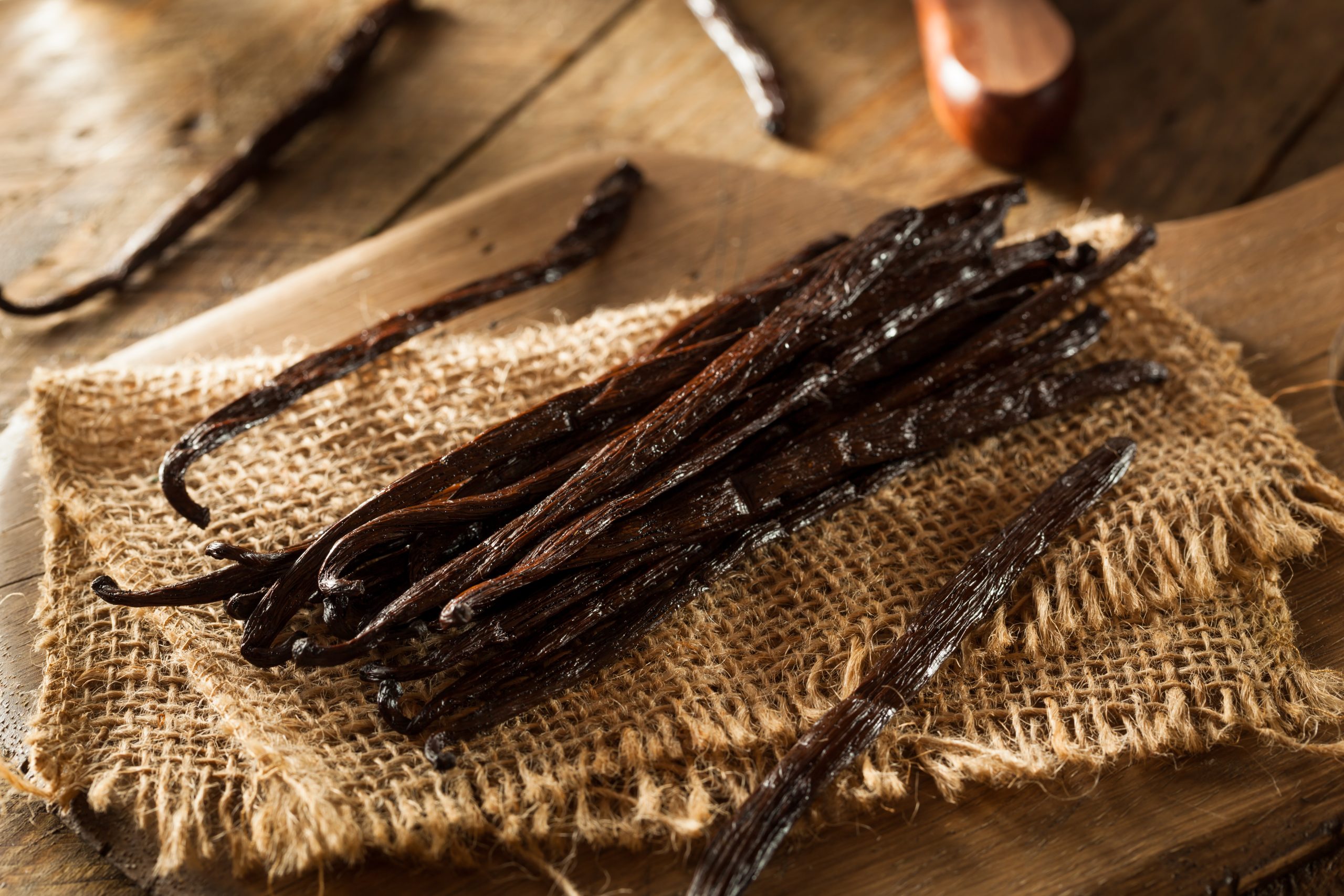
Vanillin is one of the most important and widely used ingredients in perfumery. It provides the characteristic sweet, creamy vanilla scent found in countless fragrances.
It is essential in gourmand, amber, and oriental perfumes, and even small amounts can significantly increase warmth and richness.
Because vanillin is strong and long-lasting, it is usually used at moderate percentages to avoid overpowering the formula.
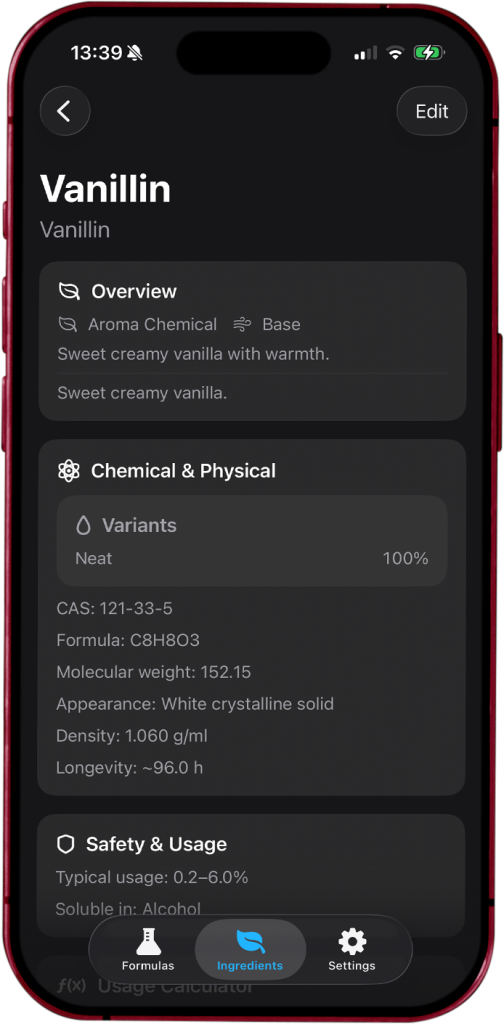
What Vanillin Smells Like
Vanillin has a rich, sweet scent.
It smells:
sweet
creamy
vanilla-like
warm
slightly powdery
It is the primary molecule responsible for the smell of natural vanilla extract.
Vanillin is especially important in:
gourmand fragrances
amber fragrances
oriental fragrances
sweet modern perfumes
It helps create a comforting, warm base.
Typical Vanillin Usage Percentage in Perfume
Vanillin is typically used between:
0.5% and 5% of the fragrance formula
Most commonly:
1% to 3%
Typical ranges:
0.1–0.5%
Adds subtle sweetness and warmth.
0.5–2%
Common range for supporting amber and gourmand bases.
2–4%
Clearly noticeable vanilla character.
4–5%
Strong vanilla presence.
Higher levels are possible but may overpower the fragrance.
Vanillin is usually diluted to 10% before use.
What Happens at Low Percentages (0.1–0.5%)
At low levels, vanillin enhances warmth and smoothness without clearly smelling like vanilla.
It helps:
soften harsh notes
improve blending
add subtle sweetness
It is often used this way even in non-gourmand fragrances.
What Happens at Medium Percentages (0.5–3%)
This is the most common usage range.
Vanillin contributes clear sweetness and warmth.
It creates:
amber richness
gourmand character
smooth base structure
Many commercial perfumes use vanillin in this range.
What Happens at High Percentages (3–5%)
At higher levels, vanillin becomes a dominant base note.
This is common in:
gourmand fragrances
sweet amber perfumes
vanilla-focused fragrances
Excessive amounts can make the fragrance smell heavy or overly sweet.
Vanillin’s Role in Fragrance Structure
Vanillin is a base note.
It evaporates slowly and contributes to the long-lasting sweetness of a fragrance.
Its main functions include:
adding sweetness
creating vanilla accords
improving longevity
supporting amber structures
It blends especially well with ethyl maltol, coumarin, musks, and amber materials.
Example Vanillin Usage in a Formula
Example gourmand amber formula:
Hedione – 18%
Iso E Super – 20%
Galaxolide – 14%
Vanillin (10% solution) – 20%
Ethyl Maltol (10% solution) – 3%
Ambroxan – 6%
Bergamot – 5%
Other materials – 14%
In this formula, vanillin provides the main sweet base.
IFRA Limits and Safety Considerations
Vanillin is widely used and generally safe within normal perfumery ranges.
Typical usage levels in fine fragrance are well below IFRA limits.
Always check your supplier’s IFRA certificate.
Common Mistakes When Using Vanillin
Using too much
This can make the fragrance overly sweet or heavy.
Not diluting before use
Dilution allows more accurate measurement.
Using it without balancing materials
Vanillin works best with woody, amber, and musk ingredients.
What percentage of vanillin should be used in perfume?
Most perfumes use vanillin between 1% and 3%.
Vanilla-focused fragrances may use up to 5%.
Is vanillin a top, middle, or base note?
Vanillin is a base note.
What popular perfumes use vanillin?
Vanillin is used in many famous fragrances including Shalimar, Black Opium, and Spiritueuse Double Vanille. It provides the warm, sweet vanilla base.
Does vanillin increase longevity?
Yes. Vanillin evaporates slowly and helps fragrances last longer.
Is vanillin the same as vanilla extract?
Vanillin is the main molecule responsible for the smell of vanilla, but natural vanilla contains many additional aroma compounds.
Can vanillin be overdosed?
Yes. Excessive amounts can overpower other notes and make the fragrance too sweet.