
Ambroxan is one of the defining materials of modern perfumery. Its warm amber-woody character, exceptional longevity, and versatility make it a key component in countless professional formulas.
Many contemporary fragrances rely heavily on Ambroxan for both structure and performance.
Knowing how much to use — and how it affects a formula — is essential when working with it.
What Ambroxan Smells Like
Ambroxan has a rich, smooth character often described as:
• Amber-woody
• Warm and slightly sweet
• Musky
• Radiant and diffusive
It provides depth without heaviness.
It is especially effective in modern woody and amber compositions.
Typical Usage Range in Perfume Formulas
Ambroxan is commonly used between:
1% and 10% of the formula
At lower levels (1–3%), it adds subtle warmth and support.
At moderate levels (3–6%), it becomes a clear structural element.
At higher levels (6–10%), it strongly influences both scent and performance.
Some minimalist fragrances use even higher percentages.
Ambroxan Is Extremely Long-Lasting
Ambroxan has very low volatility.
This allows it to remain detectable for many hours, often longer than most other materials.
It plays a major role in fragrance longevity.
It is frequently used as part of the base structure.
It Improves Both Longevity and Projection
Unlike some heavy materials that remain close to the skin, Ambroxan also has excellent diffusion.
This makes fragrances easier to detect in the air.
It contributes to the overall performance profile.
This combination of longevity and projection is one reason it is so widely used.
It Works Well With Many Accord Types
Ambroxan blends effectively with:
• Woody materials
• Musks
• Citrus materials
• Floral notes
• Marine accords
It enhances depth while maintaining clarity.
This makes it extremely versatile.
Beginner Mistake: Using Too Much Too Quickly
Because Ambroxan is powerful and long-lasting, excessive use can overwhelm a formula.
It can dominate softer materials.
Starting around 2–4% is often a good testing range.
Then adjust gradually.
It Is Often Combined With Iso E Super and Musks
Many modern base accords combine:
Iso E Super
Ambroxan
Musks
Together, these materials create strong, stable foundations.
This combination appears in countless contemporary fragrances.
Stability and Safety
Ambroxan is highly stable.
It performs well in alcohol-based fragrances and remains consistent over time.
Always verify IFRA limits when formulating, although permitted usage levels are generally generous.
Testing and Formula Development
Small adjustments to Ambroxan percentage can significantly affect fragrance performance.
Tracking these changes carefully helps refine formulas efficiently.
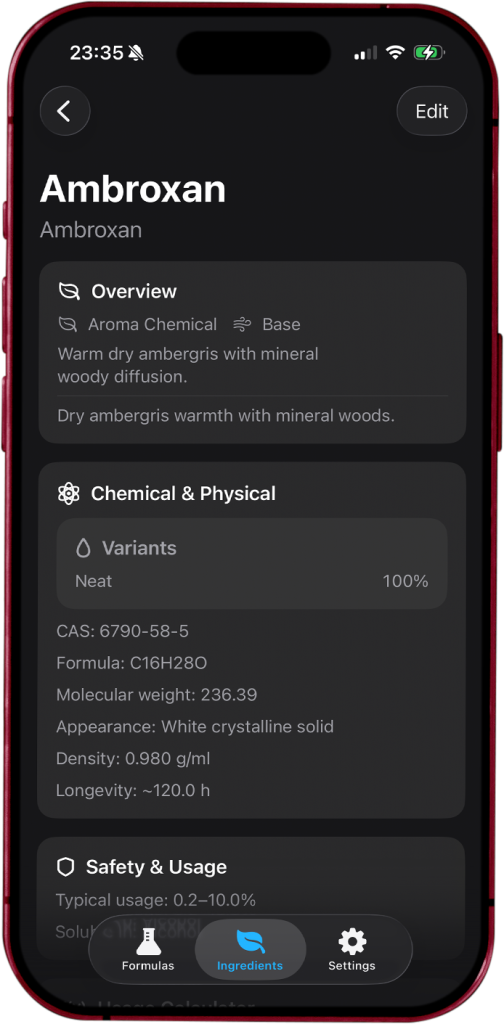
Digital formulation tools allow perfumers to monitor ingredient percentages, visualise performance curves, and receive AI recommendations to improve longevity and diffusion.
Ambroxan is one of the most important structural materials in modern perfumery.
Typical usage ranges from 1% to 10%, depending on the role it plays.
It improves longevity, enhances projection, and adds warmth and depth.
Understanding how to use it effectively helps create fragrances with professional-level performance.
PerfumeLab provides precise ingredient tracking, performance visualisation, and AI-assisted recommendations to help perfumers optimise formula structure.
You can explore PerfumeLab here:
What is Ambroxan used for in perfume?
Ambroxan is used to add warmth, depth, and longevity to perfume formulas. It provides a smooth amber-woody character and helps anchor lighter notes, making fragrances last longer and project more effectively.
How much Ambroxan should you use in a perfume formula?
Ambroxan is typically used between 1% and 10% of the fragrance concentrate. Lower levels add subtle support, while higher levels can strongly influence both scent and performance.
Does Ambroxan increase perfume longevity?
Yes. Ambroxan has very low volatility, which allows it to remain detectable on skin for many hours. It is commonly used as part of the base structure to improve fragrance longevity.
Is Ambroxan a base note?
Ambroxan functions primarily as a base material. It evaporates slowly and provides a long-lasting foundation that supports the rest of the fragrance.
What does Ambroxan smell like?
Ambroxan has a warm, smooth scent often described as amber-woody, slightly musky, and softly sweet. It adds depth without feeling heavy or overpowering.
Is Ambroxan natural or synthetic?
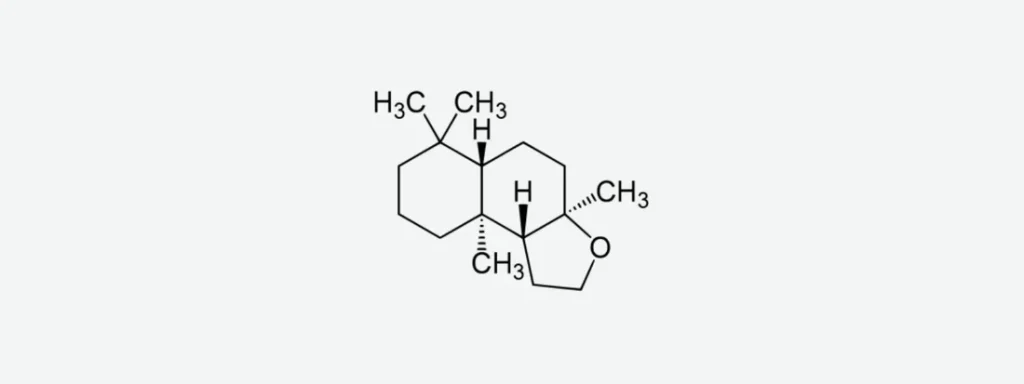
Ambroxan is usually produced synthetically, although it is based on ambrein, a natural compound found in ambergris. Synthetic Ambroxan provides a stable and ethical alternative to natural ambergris.
Why is Ambroxan used so often in modern fragrances?
Ambroxan improves both longevity and projection while remaining smooth and versatile. It blends well with woody, floral, citrus, and amber materials, making it extremely useful in modern perfume design.
Can Ambroxan be used at very high percentages?
Yes, but high concentrations can dominate a formula. Most perfumers use it carefully within a balanced base accord to avoid overwhelming other materials.
Does Ambroxan improve projection?
Ambroxan contributes to both projection and longevity. It helps fragrances radiate into the air while also remaining detectable on skin for extended periods.
What ingredients work well with Ambroxan?
Ambroxan blends particularly well with Iso E Super, musks, woody materials, citrus notes, and floral accords. These combinations are common in modern fragrance bases.
Is Ambroxan the same as ambergris?
Ambroxan is derived from the same chemical structure responsible for the scent of ambergris, but it is produced synthetically. It provides a similar warm, amber character without requiring animal-derived materials.
How do perfumers track Ambroxan usage in formulas?
Because Ambroxan strongly affects longevity and performance, perfumers track its percentage carefully when developing formulas. Digital formulation tools make it easier to monitor ingredient levels and visualise performance changes.