

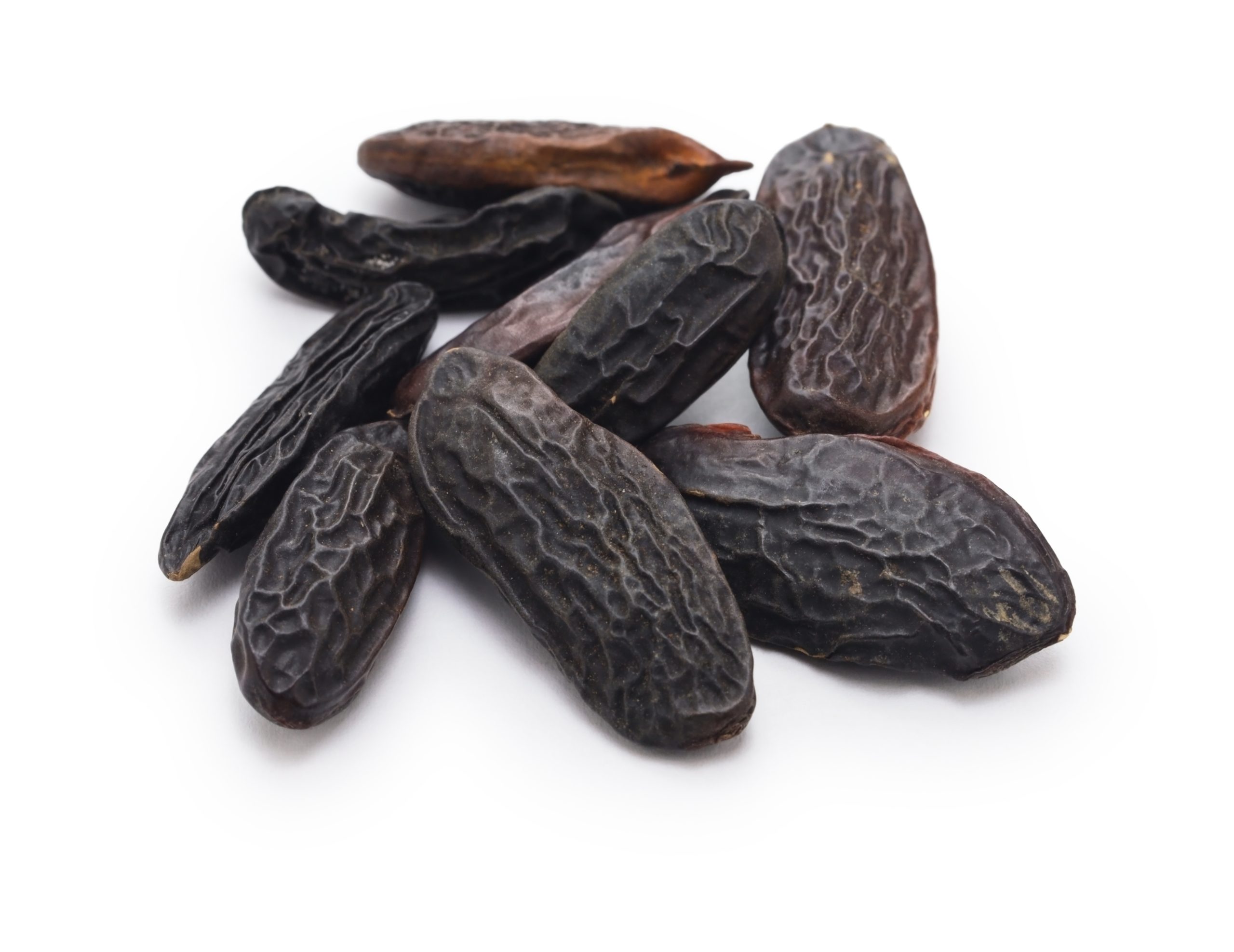
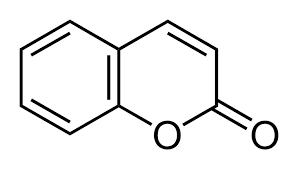
Coumarin is one of the most important and historically significant ingredients in perfumery. It has been used since the late 1800s and was one of the first synthetic aroma chemicals ever introduced.
It provides a warm, sweet, slightly powdery scent and is essential in fougère, amber, and gourmand fragrances.
Coumarin is very effective even at low percentages, and careful dosing is important to maintain balance and comply with IFRA limits.
What Coumarin Smells Like
Coumarin has a warm, sweet scent.
It smells:
sweet
vanilla-like
tonka bean-like
powdery
slightly almond-like
It is naturally present in tonka beans and contributes heavily to their characteristic scent.
It is especially important in:
fougère fragrances
amber fragrances
gourmand fragrances
masculine fragrances
Many classic and modern perfumes rely on coumarin as part of their base.
Typical Coumarin Usage Percentage in Perfume
Coumarin is typically used between:
0.1% and 5% of the fragrance formula
Most commonly:
0.5% to 2%
Typical ranges:
0.05–0.2%
Adds subtle warmth and sweetness.
0.2–1%
Common range for improving richness.
1–3%
Clearly noticeable tonka-like character.
3–5%
Strong sweet and powdery effect.
Higher levels are possible but often restricted by IFRA limits.
Coumarin is usually diluted to 10% before use.
What Happens at Medium Percentages (0.5–2%)
This is the most common usage range.
Coumarin becomes clearly noticeable and contributes strongly to the fragrance character.
It creates:
tonka bean character
powdery warmth
amber richness
This range is widely used in both classic and modern fragrances.
What Happens at High Percentages (2–5%)
At higher levels, coumarin becomes a dominant base material.
This is common in:
fougère fragrances
gourmand perfumes
heavy amber fragrances
Excessive amounts can make the fragrance smell overly powdery.
Coumarin’s Role in Fragrance Structure
Coumarin is a base note.
It evaporates slowly and contributes to long-lasting warmth and sweetness.
Its main functions include:
adding warmth
creating tonka bean accords
supporting vanilla notes
improving longevity
It blends extremely well with vanillin, ethyl maltol, musks, and amber materials.
Example Coumarin Usage in a Formula
Example amber fougère formula:
Lavender – 12%
Bergamot – 8%
Hedione – 15%
Coumarin (10% solution) – 8%
Iso E Super – 22%
Galaxolide – 14%
Ambroxan – 6%
Other materials – 15%
In this formula, coumarin provides warmth and classic fougère character.
IFRA Limits and Safety Considerations
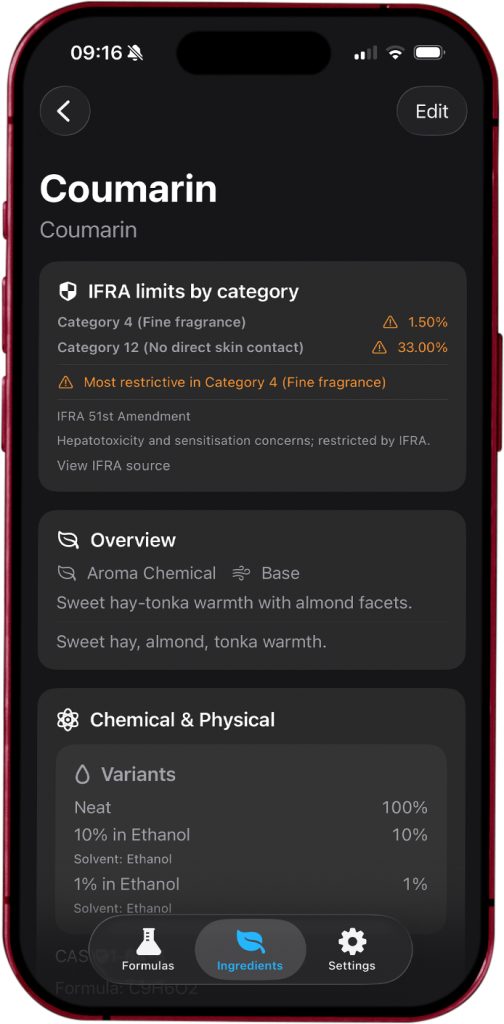
Coumarin is restricted by IFRA due to sensitisation concerns at high concentrations.
Most fine fragrance formulas use coumarin well below restriction limits, but it is important to calculate compliance properly.
Always refer to the IFRA certificate for your material.
Common Mistakes When Using Coumarin
Using too much
This can create excessive powderiness.
Not diluting before use
Coumarin is easier to measure accurately when diluted.
Ignoring IFRA limits
Coumarin has stricter limits than many aroma chemicals.