
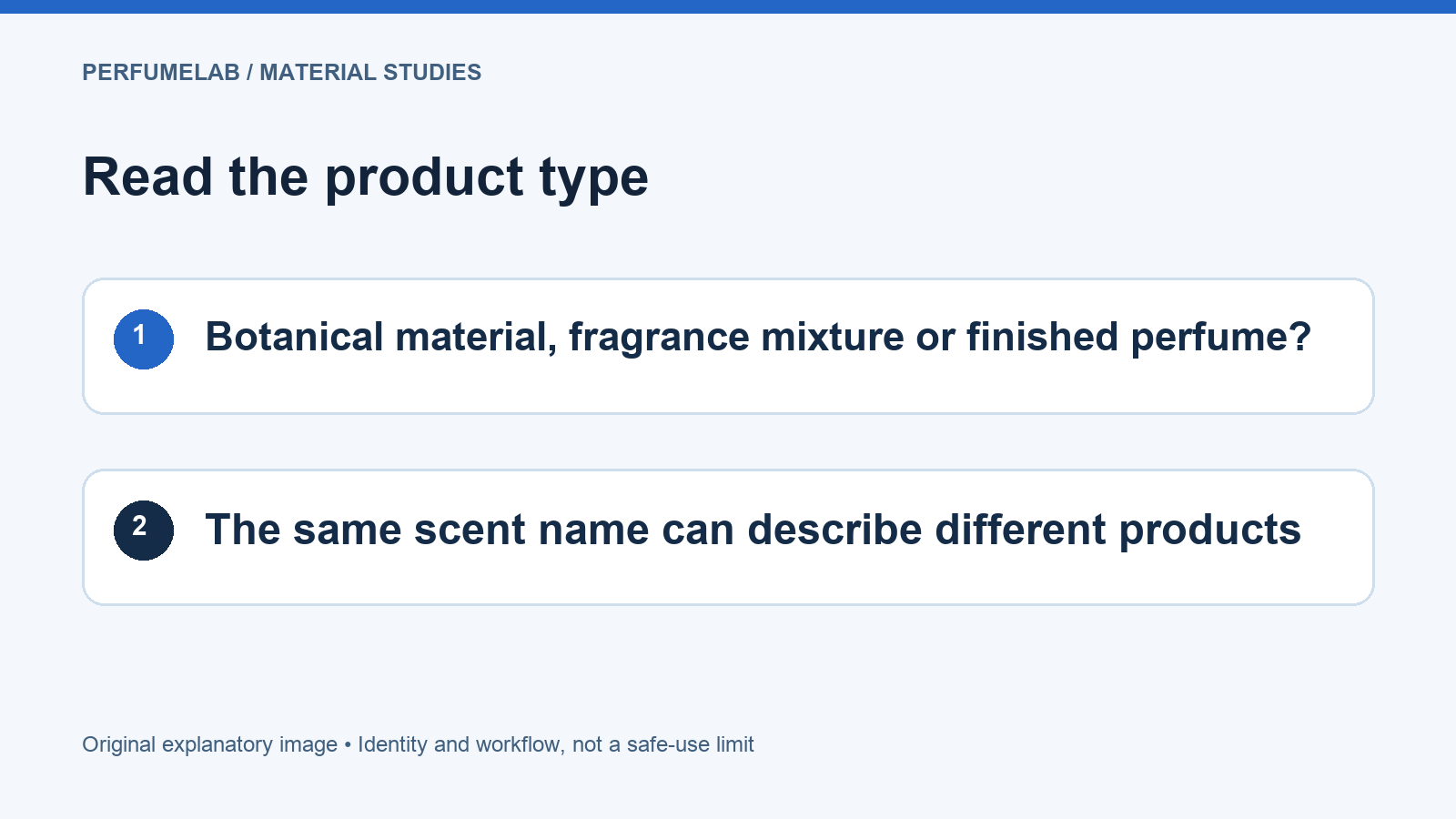

An essential oil, a fragrance oil and a finished perfume oil can share a scent description while being different products. Before using one in a formula, establish which kind of material the supplier is selling.
Start with identity rather than the scent name
“Rose”, “vanilla” or “bergamot” might identify a botanical material, describe the effect of a compounded fragrance, or name a finished consumer product. The front label alone may not resolve the distinction.
Ask for the complete product name and intended use. A botanical product should have appropriate identity and specification information; a proprietary fragrance mixture needs the supplier evidence relevant to that mixture and its application. A finished skin product should not be treated as a known perfumery raw material simply because it comes in an oil format.
Do not infer the composition from the category
A fragrance mixture may use natural and synthetic ingredients. The term fragrance oil does not reveal a complete recipe or establish a single standard strength. Likewise, the word essential does not mean an oil is automatically suitable for neat skin application.
IFRA's explanation of fragrance ingredients rejects an automatic safety preference for essential oils over synthetics. Review the actual supplied material and intended exposure instead of relying on the category name.
Keep supplied strength visible
Some products include a carrier or are sold at a stated dilution. Preserve that information in the formula library. A line representing a purchased mixture is not the same as a line representing a neat single substance, even when their informal names sound similar.
If you are assessing a proprietary mixture, do not invent constituent percentages to fill a spreadsheet. Obtain the appropriate supplier documentation and identify any unanswered questions. An appealing product description is not composition data.
Use a short purchasing checklist
Record product identifier, supplier, product type, stock or supplied strength, carrier information where available, intended application and supporting documents. If you cannot complete the identity fields, resolve them before treating the bottle as a repeatable formula component.
This approach does not make one category the universal best choice. It helps you buy the type of material your project actually needs and describe it accurately when you share the formula. That is more useful than discovering later that two similarly named “oils” were never equivalent products.