
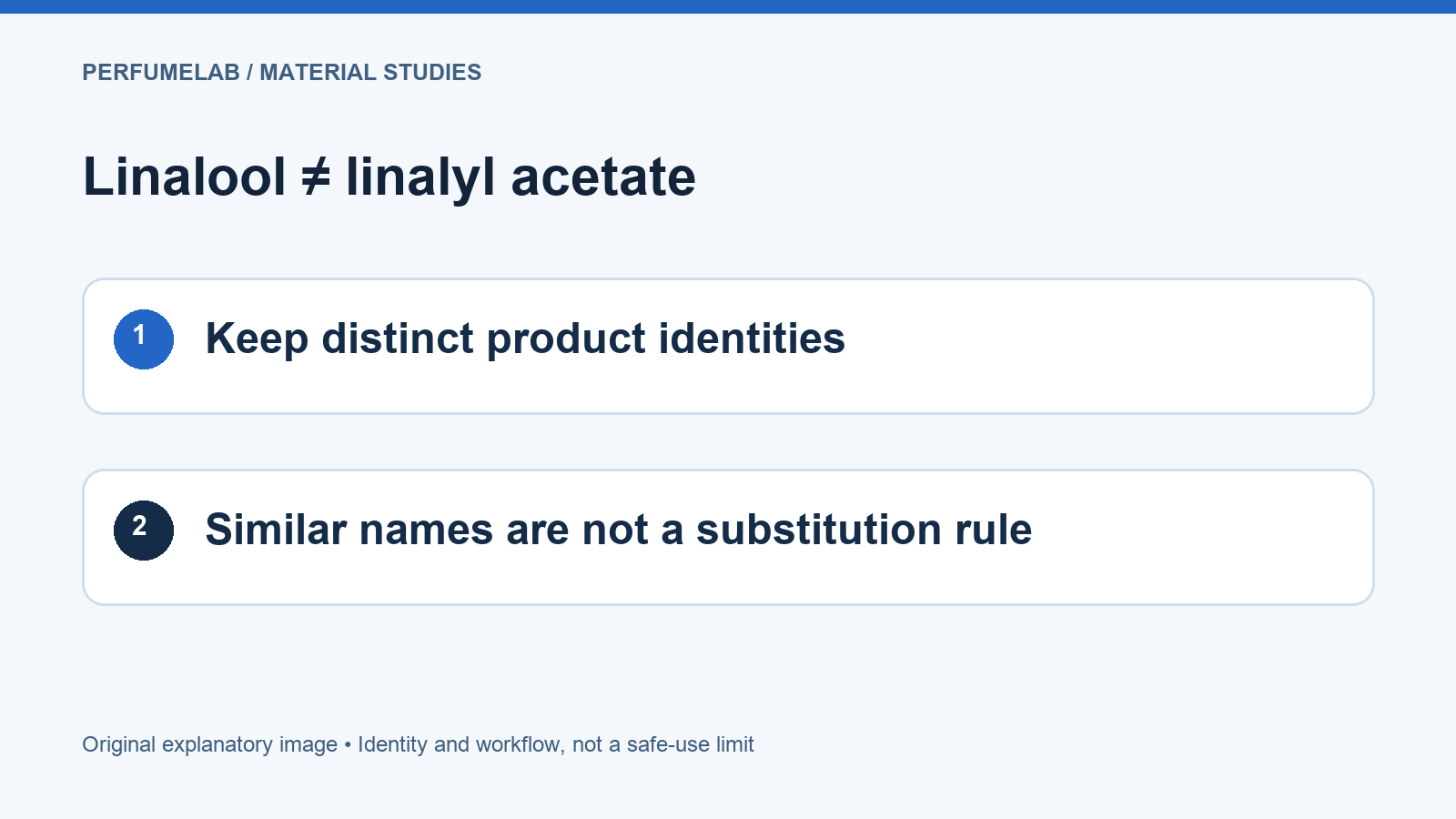

Linalool and linalyl acetate are different materials. Their similar names are a good reason to read a formula carefully, especially when entering ingredients into a new library or ordering from a supplier.
Keep the chemical names intact
Linalool is an alcohol; linalyl acetate is an ester. Here “alcohol” describes a chemical functional group, not an instruction to use the material as the perfume's bulk ethanol carrier. The words play different roles in a formulation conversation.
Supplier identity information distinguishes linalyl acetate, including CAS 115-95-7, from linalool. Do not shorten both entries to “linalyl” or use one supplier record as a placeholder for the other. A convenient alias should help you find the right material, not merge separate ingredients.
Do not assume matching odour roles
Related vocabulary or an association with familiar natural materials does not establish identical effects in a blend. If you are investigating a replacement, define the purpose and compare the exact supplied products under consistent conditions. The neroli, orange-blossom absolute and petitgrain comparison applies the same caution to related botanical materials.
Use suitable documented stocks and record their strength basis. A weaker stock can make one material seem less evident simply because less active material reached the trial. Conversely, matching active mass does not promise an equal sensory contribution.
Keep your own observations separate from the supplier description. A note such as “changed the opening in trial B” is evidence from that trial. A general claim that one always makes every fragrance fresher is much harder to justify.
Do the technical checks independently
The material identity used for a safety or specification check must match the product in the bottle. Do not copy a limit or requirement from the neighbouring name in an ingredient database. Linalool also has an oxidation/specification context that is not captured by treating it as a generic percentage line.
Follow the relevant supplier and official information for handling and assessment. A satisfactory smell is not an analytical purity result, and this article provides no safe-use threshold.
Make the distinction visible when sharing
Include full names, stock strengths and units in an exported formula. If a collaborator asks which one you meant, answer from the record rather than from memory. That small habit prevents a naming ambiguity from becoming an unexplained formulation change.
Sources
Perfumer’s Apprentice: Linalyl Acetate
[…] The word alcohol identifies the material’s chemical family here. Leaf alcohol is a fragrance ingredient, not another name for the ethanol used as a perfume carrier. For another example of why an alcohol and its related ester need separate records, see linalool vs linalyl acetate. […]