


Limonene is one of the most common fragrance ingredients and is found naturally in citrus oils such as lemon, orange, bergamot, and grapefruit. It provides a bright, fresh citrus scent and plays an important role in the opening of many perfumes.
It is present both as a standalone ingredient and as a natural component of essential oils.
Because it evaporates quickly, limonene is mainly used to create fresh top notes rather than long-lasting base structure.
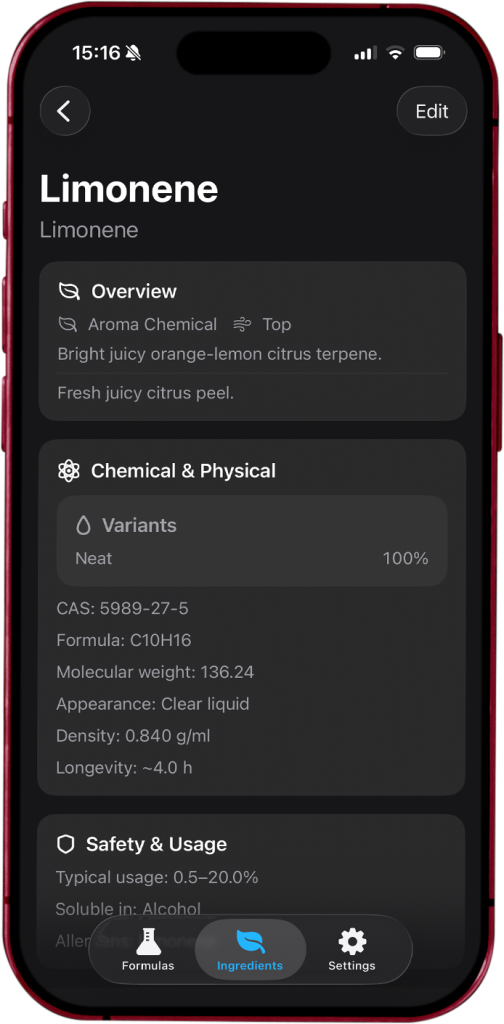
What Limonene Smells Like
Limonene has a fresh citrus scent.
It smells:
bright
lemon-like
orange-like
fresh
clean
It contributes strongly to the characteristic smell of citrus peels.
It is especially important in:
citrus fragrances
fresh fragrances
colognes
summer perfumes
Most citrus essential oils contain high levels of limonene.
What Limonene Smells Like
Limonene has a fresh citrus scent.
It smells:
bright
lemon-like
orange-like
fresh
clean
It contributes strongly to the characteristic smell of citrus peels.
It is especially important in:
citrus fragrances
fresh fragrances
colognes
summer perfumes
Most citrus essential oils contain high levels of limonene.
Typical Limonene Usage Percentage in Perfume
Limonene is typically used between:
0.5% and 20% of the fragrance formula
Most commonly:
2% to 10%
Typical ranges:
0.2–1%
Adds subtle citrus freshness.
1–5%
Common range for supporting fresh openings.
5–10%
Clearly noticeable citrus character.
10–20%
Strong citrus presence.
Higher levels are uncommon because limonene evaporates quickly.
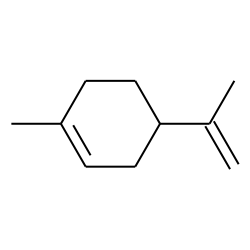
What Happens at Low Percentages (0.2–1%)
At low levels, limonene adds freshness without dominating the fragrance.
It helps:
brighten heavy base notes
improve natural character
support citrus accords
It is often used alongside bergamot and orange materials.
What Happens at Medium Percentages (1–10%)
This is the most common usage range.
Limonene contributes clearly to the opening and enhances freshness.
It creates:
bright citrus openings
clean fragrance character
natural freshness
Many fresh fragrances use limonene in this range.
What Happens at High Percentages (10–20%)
At higher levels, limonene becomes a dominant citrus note.
This is used in:
cologne-style fragrances
citrus-focused perfumes
However, because it evaporates quickly, the effect is mainly limited to the opening.
Limonene’s Role in Fragrance Structure
Limonene is a top note.
It evaporates quickly and contributes to the initial impression of the fragrance.
Its main functions include:
creating freshness
enhancing citrus accords
improving realism
supporting natural character
It blends especially well with bergamot, linalool, Hedione, and woody base materials.
Example Limonene Usage in a Formula
Example fresh citrus formula:
Bergamot – 12%
Limonene – 6%
Linalool – 5%
Hedione – 18%
Iso E Super – 20%
Galaxolide – 12%
Ambroxan – 6%
Other materials – 21%
In this formula, limonene strengthens the citrus opening.
IFRA Limits and Safety Considerations
Limonene is generally safe but is classified as a potential allergen and must be declared on cosmetic labels above certain thresholds.
It is also prone to oxidation, which can increase sensitisation risk.
Using fresh, properly stored materials is important.
Always refer to IFRA documentation.
Common Mistakes When Using Limonene
Using too much
This can make the fragrance smell overly simple or harsh.
Ignoring oxidation
Old limonene can degrade and smell unpleasant.
Expecting longevity
Limonene evaporates quickly.
What percentage of limonene should be used in perfume?
Most perfumes use limonene between 2% and 10%.
Citrus fragrances may use higher levels.
Is limonene a top, middle, or base note?
Limonene is a top note.
What popular perfumes contain limonene?
Limonene is present in many citrus fragrances including Acqua di Gio, Light Blue, and CK One. It contributes to their fresh citrus opening.
Why is limonene listed on perfume ingredient labels?
It is a natural component of many citrus oils and must be declared when present above certain levels.
Does limonene improve longevity?
No. Limonene evaporates quickly and mainly affects the opening.
Is limonene natural or synthetic?
Both. It occurs naturally in citrus oils and can also be produced synthetically.