

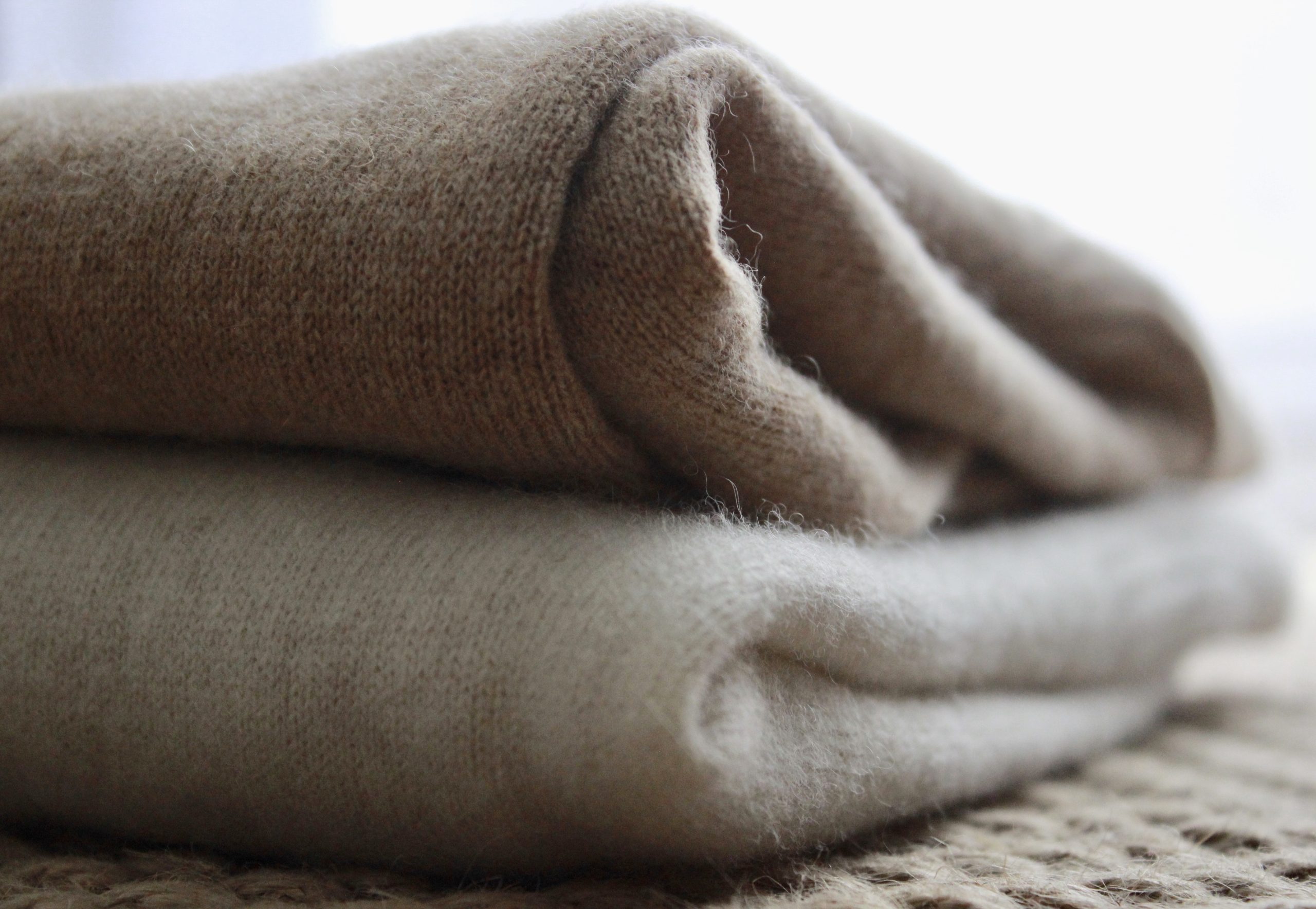
Cashmeran is one of the most widely used modern woody materials in perfumery. It provides a warm, musky, woody character and is often responsible for the soft, diffusive depth in many contemporary fragrances.
It is especially common in woody, amber, and masculine fragrances, but it also appears in floral and gourmand compositions to add body and longevity.
Understanding how much Cashmeran to use is important, because small amounts add subtle warmth, while larger amounts can dominate the entire fragrance.
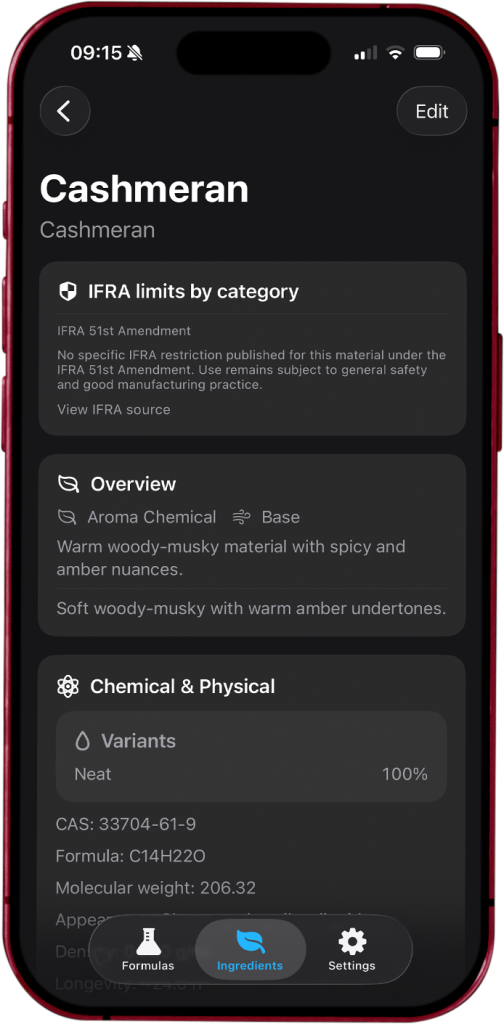
What Cashmeran Smells Like
Cashmeran has a complex scent profile combining woody, musky, and slightly spicy characteristics.
It smells:
woody
musky
warm
slightly sweet
slightly spicy
soft and diffusive
Some people also describe a dry, fabric-like softness, which is where the name originates.
Cashmeran is often used to create a smooth, modern woody base.
Typical Cashmeran Usage Percentage in Perfume
Cashmeran is typically used between:
0.5% and 8% of the fragrance formula
Most commonly:
1% to 5%
Typical ranges:
0.2–1%
Adds subtle warmth and diffusion.
1–3%
Very common range. Enhances woody and musky bases.
3–6%
Clearly noticeable woody character.
6–8%
Strong Cashmeran presence.
Above 10% is uncommon and usually overpowering.
What Happens at Low Percentages (0.2–1%)
At low levels, Cashmeran mainly improves the overall texture of a fragrance.
It helps:
increase smoothness
add subtle warmth
support woody notes
improve diffusion
At this level, it is not easily identifiable as a distinct note.
What Happens at Medium Percentages (1–5%)
This is the most common usage range.
Cashmeran becomes an important structural material and contributes clearly to the base.
It creates:
modern woody character
musky warmth
stronger projection
better longevity
Many commercial perfumes use Cashmeran in this range.
What Happens at High Percentages (5–8%)
At higher levels, Cashmeran becomes one of the dominant base materials.
This is used in:
woody perfumes
amber fragrances
modern masculine scents
However, excessive amounts can make a fragrance smell dry or harsh.
Cashmeran’s Role in Fragrance Structure
Cashmeran is primarily a base note, although it has some mid-note diffusion.
It evaporates slowly and helps anchor lighter materials.
Its main functions include:
adding woody depth
improving longevity
creating modern amber-woody accords
enhancing projection
It blends especially well with Iso E Super, Ambroxan, musks, and sandalwood materials.
Example Cashmeran Usage in a Formula
Example modern woody formula:
Iso E Super – 28%
Hedione – 15%
Cashmeran – 4%
Ambroxan – 7%
Galaxolide – 14%
Bergamot – 6%
Other materials – 26%
In this formula, Cashmeran strengthens the woody base and improves longevity.
IFRA Limits and Safety Considerations
Cashmeran is generally safe and widely used within normal perfumery ranges.
Typical usage in fine fragrance is well below restriction levels.
Always check the IFRA certificate from your supplier, as limits depend on fragrance category and concentration.
Common Mistakes When Using Cashmeran
Using too much
High levels can create dryness or harshness.
Using too little
The fragrance may lack depth and body.
Not balancing with other woody materials
Cashmeran works best alongside materials like Iso E Super or sandalwood.
What percentage of Cashmeran should be used in perfume?
Most perfumes use Cashmeran between 1% and 5%.
Lower levels add subtle warmth, while higher levels create a strong woody base.
Is Cashmeran a top, middle, or base note?
Cashmeran is mainly a base note, with some mid-note diffusion.
Does Cashmeran increase fragrance longevity?
Yes. Cashmeran evaporates slowly and helps fragrances last longer.
Can Cashmeran be overdosed?
Yes. Very high levels can smell dry, harsh, or overpowering.
Yes. Very high levels can smell dry, harsh, or overpowering.
Cashmeran is common in:
woody fragrances
amber fragrances
masculine fragrances
modern niche perfumes
Does Cashmeran improve projection?
Yes. It has excellent diffusion and helps fragrances project more strongly.