
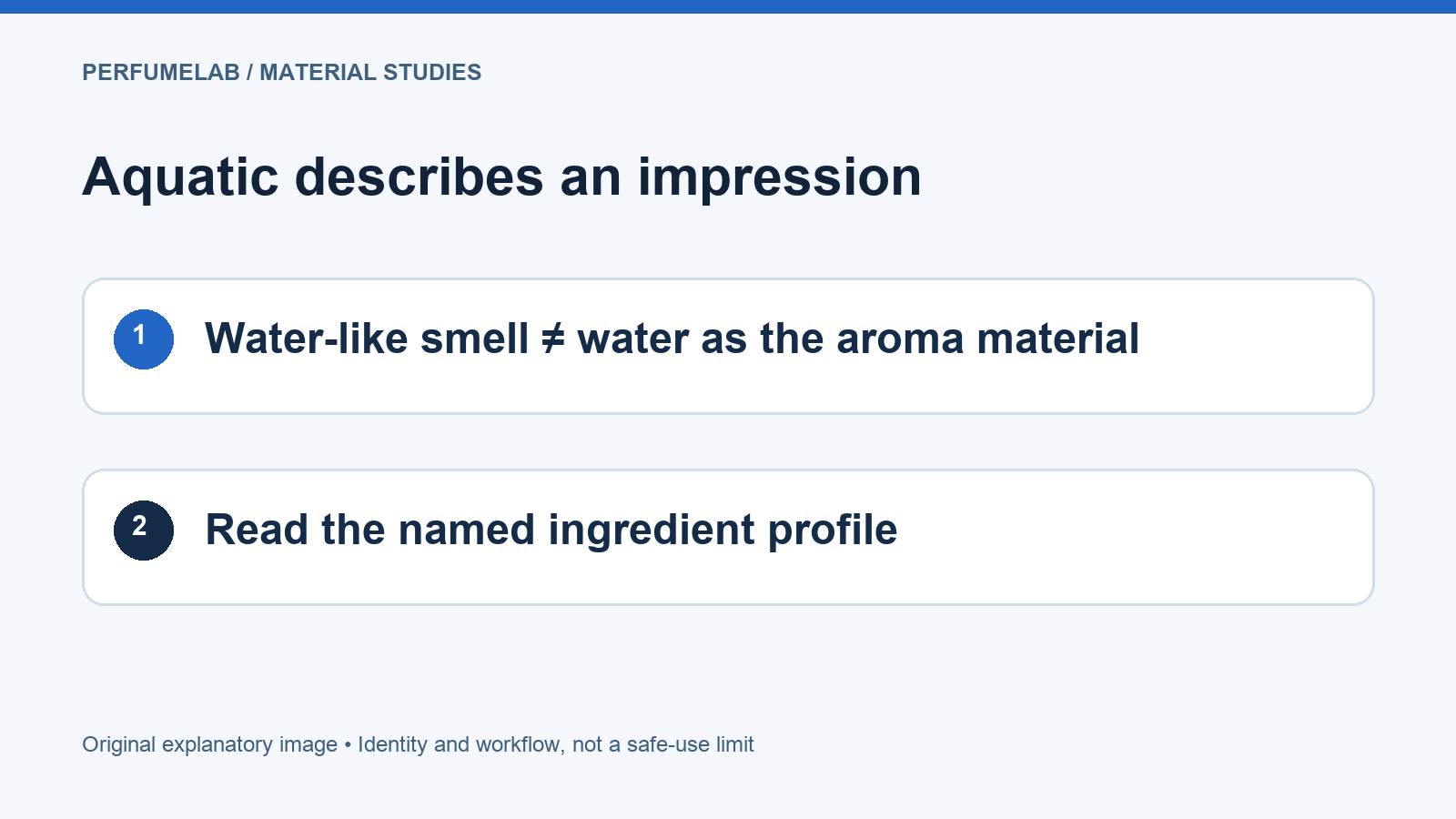

An aquatic note describes a water-associated smell impression. It does not tell you that the effect was created by adding water, seawater or a single universal “aquatic oil” to the perfume.
Separate the impression from the material
A note is language for an experience. An ingredient is a specific supplied material that can be weighed and documented. Keeping those ideas separate makes an ingredient search much more productive.
dsm-firmenich describes Cascalone, for example, as a fresh aquatic material with watery, fruity and transparent floral facets. That manufacturer profile shows how a named perfumery ingredient can support a water-like effect. It does not establish that every aquatic perfume uses Cascalone, or that the finished smell is the same as the material in isolation.
Make the brief more specific
“Aquatic” can be too broad to guide a trial. Are you imagining a fresh-water impression, a marine association or a transparent floral texture? Write the intended effect in concrete terms, then use verified supplier profiles to identify materials worth studying.
Keep those descriptions as starting hypotheses. Do not take a marketing note pyramid as a complete ingredient list. Two fragrances can evoke water using different compositions, and the same ingredient can play different roles in different blends.
Study the material before building around it
Use an appropriate documented evaluation method and suitable dilution for the exact material. Record the product identity, stock strength, carrier and observation conditions. Never assume that a water-associated descriptor makes a raw material suitable for direct skin application or for mixing into water.
Evaluate a small, clearly recorded comparison in context. Ask what changed in the overall fragrance: did the material support the intended effect, introduce another facet, or distract from the brief? Those observations are more useful than deciding that a whole ingredient family “always smells synthetic”.
Keep the formula literal
In the batch record, write the actual material names and quantities. In your creative notes, describe the aquatic impression you are pursuing. Both kinds of record matter, but they should not be mistaken for each other.
This distinction also helps when you share a formula. Another perfumer can obtain a named product and interpret its specification; “a few drops of ocean” leaves them guessing about both the ingredient and the measurement.