
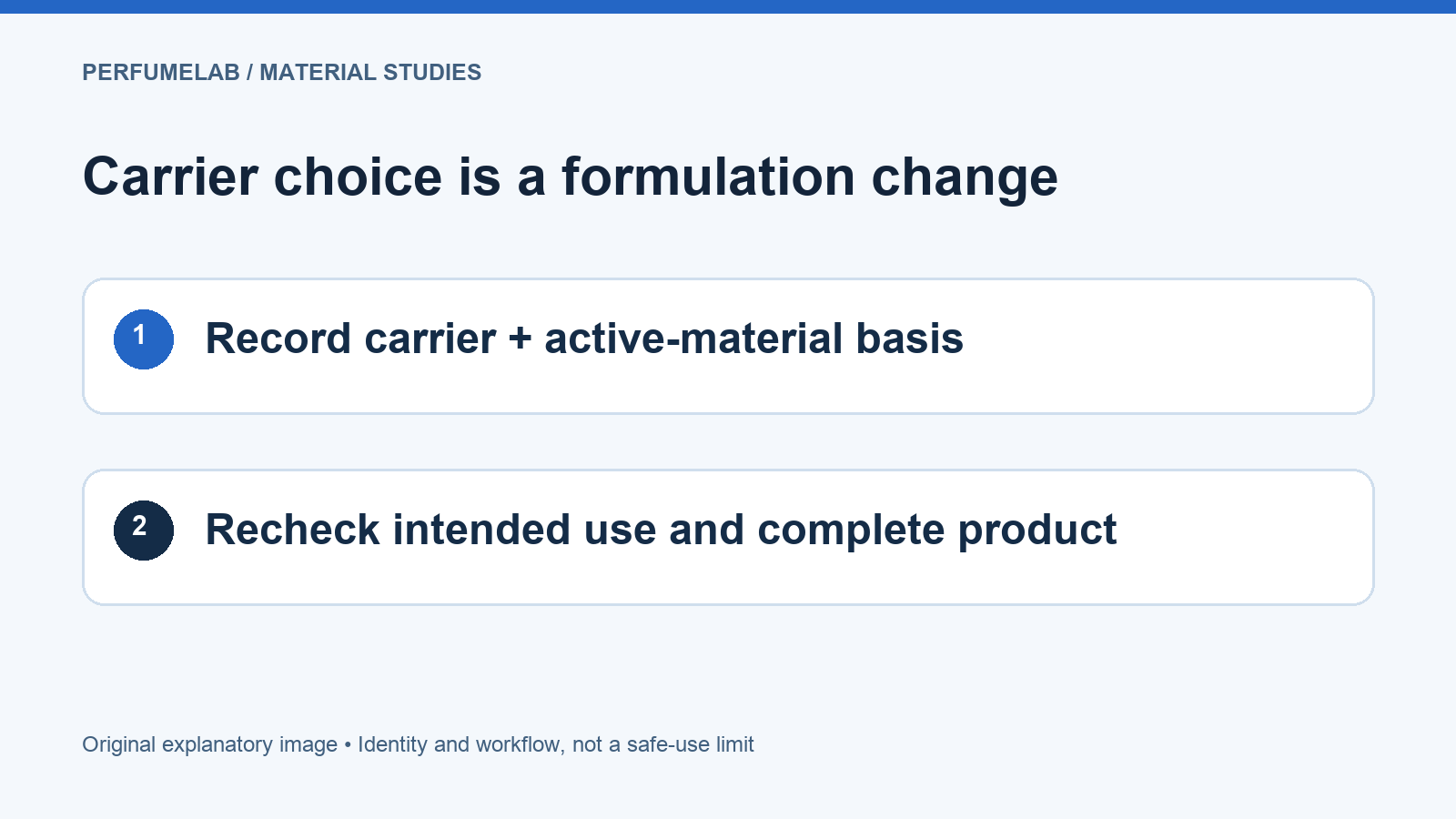

Moving a perfume from an alcohol-based system to an oil-based one is a formulation change. Keeping the same fragrance percentage does not establish that the two finished products will behave identically.
Define what each percentage includes
Write the complete composition basis. A product made with 20% of a fragrance mixture and 80% carrier contains 20% of that supplied mixture by mass. Its active aromatic content may be lower if the mixture already contains stock solvents. These numbers are a fictional bookkeeping example, not a recommended concentration.
Use the same basis when comparing versions. Otherwise, one “20% perfume” may describe neat aromatic materials while the other describes heavily diluted stock solutions. The matching headline number can conceal a substantial difference.
Identify the carrier system
Name the actual carrier products and specifications. Do not record only “oil” or assume that every carrier provides identical solubility, application or sensory behaviour. The chosen materials must be suitable for the intended finished product and handling method.
A supplier's statement that a material works in one system does not automatically cover a different system. Review the relevant technical information and evaluate the complete mixture. Do not add an unfamiliar co-solvent solely because a general recipe suggests it will fix every solubility problem.
Check intended use, not just the absence of alcohol
IFRA's guidance discusses attar and attar-type products according to their intended uses. An alcohol-free format does not, by itself, determine the category. A fine-fragrance use, a broad-area body-oil use and a non-skin application are different scenarios.
State the actual product brief before making the assessment. If the intended use is ambiguous, resolve it rather than selecting whichever category allows a convenient number.
Keep distinct versions and tests
Preserve the alcohol-based reference if you are exploring an oil-based version. Record actual masses, material stocks, preparation method and evaluation conditions. Assess the new system as its own trial, including relevant appearance and storage observations.
There may be a useful direction in either format, but this article cannot supply a universal longevity winner or a standard percentage that works for every composition. A clear record gives you a better starting point: exactly what changed, why it changed and which evidence still needs checking.
[…] the carrier system is changing, keep the versions separate; see oil-based versus alcohol-based perfume and concentrate versus finished-product […]